
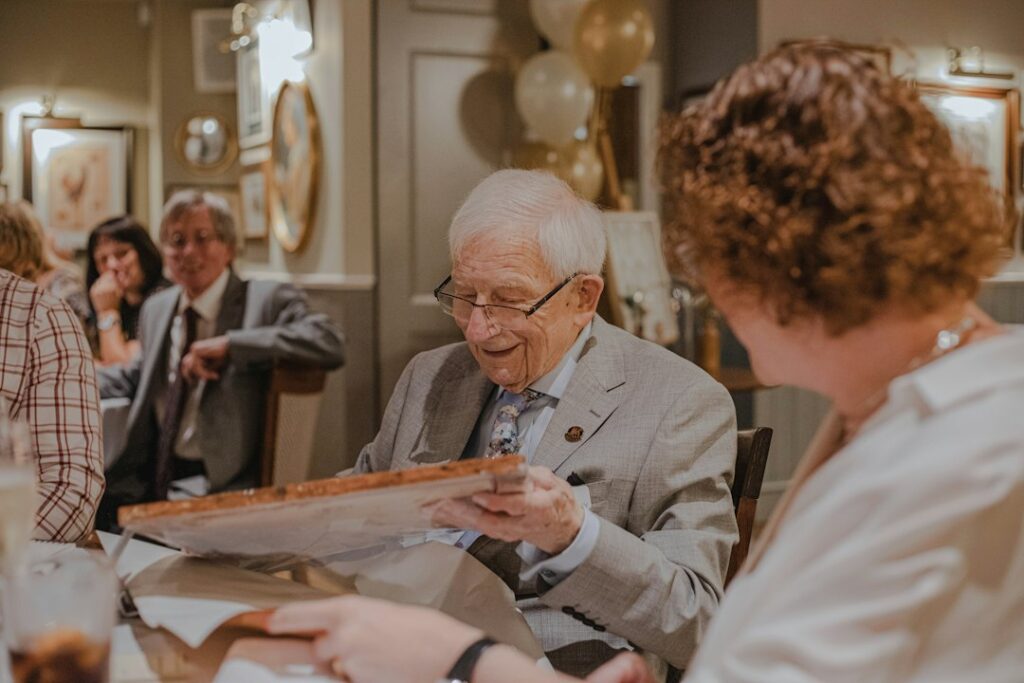
How can residents celebrate holidays in assisted living?
Residents can celebrate holidays in assisted living by adapting familiar traditions to the community setting, inviting family participation, and choosing activities that match individual abilities, preferences, and energy levels. A meaningful celebration does not need to be large or elaborate. Familiar music, favorite foods, seasonal decorations, and time with trusted people may be enough.
Holiday celebrations can also help residents maintain a sense of identity and routine. Someone who traditionally baked cookies, hosted relatives, attended worship services, or exchanged handwritten cards may still enjoy those activities in modified ways.
Planning should begin with the resident’s wishes. Some people enjoy group gatherings, while others prefer a quiet visit, a phone call, or a private meal. Participation should always be encouraged without making anyone feel obligated.
What holiday activities work well in assisted living?
The most successful activities are familiar, flexible, and easy to join for short periods. Residents should be able to participate while seated, leave early, or observe without taking part.
Useful options include:
- Decorating a small tabletop tree, wreath, window, or bulletin board
- Listening to seasonal music from different decades and cultural traditions
- Watching familiar holiday movies or recorded performances
- Making greeting cards for relatives, neighbors, or community groups
- Baking or decorating simple treats with staff supervision
- Looking through family photographs and sharing holiday memories
- Reading seasonal stories, poetry, or religious passages
- Playing holiday-themed trivia, bingo, or word games
- Wrapping small gifts or preparing handmade ornaments
- Holding a sing-along with printed lyrics in large type
Activities should be offered at different times of day. A resident who becomes tired in the afternoon may enjoy a morning craft or an early family meal more than an evening program.
How can families include a loved one without creating stress?
Families can help by asking what the resident actually wants rather than assuming every holiday tradition should continue unchanged. A short visit may be more comfortable than a crowded gathering, particularly for a person with dementia, hearing loss, or limited stamina.
Helpful approaches include:
- Visiting in smaller groups rather than bringing many people at once
- Keeping visits to a manageable length
- Bringing one meaningful item, such as a favorite ornament or photograph
- Using simple conversation prompts about past holidays
- Offering familiar snacks that fit the resident’s dietary plan
- Giving the resident permission to rest or end the visit
- Sharing photos or video messages when travel is difficult
Family members should avoid quizzing a resident who has memory loss. Questions such as “Do you remember who gave you this?” can create embarrassment if the answer is not known. A better approach is to describe the item and invite a response: “This ornament has been in the family for many years. Do you like the colors?”
For local households managing winter travel, weather can affect plans. Snow, ice, early darkness, and cold temperatures may make an in-person visit difficult. A brief video call, recorded greeting, or coordinated phone call can preserve connection when travel is unsafe.
What should residents know about holiday food and dietary needs?
Holiday foods can often be included, but portions and ingredients may need adjustment. Residents or family members should check with the assisted living care team before bringing food, especially when a person has diabetes, swallowing difficulties, food allergies, kidney disease, or other dietary restrictions.
Traditional foods may be modified by:
- Serving smaller portions
- Choosing softer textures when chewing or swallowing is difficult
- Reducing added salt or sugar
- Avoiding foods that may cause choking
- Labeling dishes with ingredients
- Serving familiar foods at the resident’s usual mealtime
Alcohol also requires caution. It may interact with medications, worsen balance problems, or contribute to confusion. Any alcoholic beverage should be discussed with the care team before it is offered.
Food is not the only way to honor tradition. The smell of cinnamon, the sound of a family recipe being read aloud, or a conversation about preparing meals may be meaningful even when a resident can no longer eat the original dish.
How can holiday decorations be made safe?

Decorations should be attractive but uncomplicated. Assisted living rooms and shared areas may have rules about candles, electrical items, open flames, extension cords, wall attachments, and floor decorations.
Safer choices often include:
- Battery-operated lights approved by the community
- Fabric, paper, or nonbreakable ornaments
- Small arrangements secured on stable surfaces
- Decorations placed away from walking paths
- Large-print seasonal signs for easier reading
- Personal items that do not create clutter
Real candles, loose cords, glass ornaments, artificial snow, and small pieces may create fire, tripping, choking, or allergy risks. Decorations should not block emergency equipment, doorways, windows, or mobility-device routes.
Residents with dementia may become distressed by flashing lights, loud sounds, or unfamiliar changes to their room. A few recognizable decorations may be more comforting than a complete seasonal transformation.
How can assisted living recognize different holidays and traditions?
A respectful holiday program should include the traditions represented by residents, while avoiding the assumption that everyone observes the same holiday. Some residents may celebrate religious holidays, cultural festivals, secular occasions, or no holiday at all.
Inclusive planning can involve:
- Asking residents which traditions matter to them
- Offering music, readings, crafts, or foods from varied backgrounds
- Using neutral seasonal decorations in shared spaces
- Providing quiet alternatives to group celebrations
- Avoiding pressure to pray, sing, dress up, or attend an event
- Giving residents opportunities to explain a tradition in their own words
The goal is not to create a performance of every tradition. It is to recognize residents as individuals with different histories, beliefs, and family customs.
What can help residents who feel lonely during the holidays?
Holiday loneliness may result from grief, family distance, health changes, or memories of earlier celebrations. A resident may appear cheerful in a group and still feel sad privately. Staff and relatives can make room for honest feelings rather than insisting that the season must be happy.
Practical support may include a scheduled daily call, a familiar television program, a one-to-one conversation, or time spent looking through photographs. Residents may also benefit from a small personal responsibility, such as choosing music, arranging cards, or helping name decorations.
A resident who has recently lost a spouse, sibling, friend, or pet may need permission to acknowledge that absence. Quiet remembrance, a favorite song, or a private conversation can be more appropriate than constant entertainment.
What should residents and families remember about holiday celebrations?
The best holiday celebration in assisted living is one that preserves choice, comfort, dignity, and connection. Familiar traditions can be continued in smaller or safer forms, and new traditions can be created around the resident’s current abilities.
A calm visit, a favorite song, a carefully chosen meal, or a decorated photograph can carry as much meaning as a large party. Holiday planning works best when residents remain at the center of decisions and when safety needs are addressed without taking away personal choice.
